Futurecity in the Field: Sculpture Is City-Making

22 September 2026

Celebrating London Sculpture Week 2026 and the developers helping to shape the cultural life of the capital.

This week, London Sculpture Week returns for its fifth edition (19–27 September 2026), inviting the city to explore itself through sculpture. Across Frieze Sculpture, the Fourth Plinth, Sculpture in the City, East Bank and The Line, the capital becomes one connected cultural venue. It is a moment worth celebrating and, for Futurecity, an opportunity to look beyond the individual artwork and ask a bigger question: what role can sculpture play in making a city?

More than an object in a public space For Futurecity, this question has shaped our work for more than two decades. Working across the cultural and development sectors, we understand both sides of the equation: the ambition, experimentation and imagination of artists, alongside the realities of how places are funded, designed, engineered and built. We do not believe sculpture should be something added to a development once the important decisions have already been made. Artists should be involved in making the city itself.

Sculpture can be far more than an object placed in a public space. It can be architecture, landscape, infrastructure, light, movement or sound. It can become a bridge, a station, a route or a landmark. At its most ambitious, sculpture changes how we see, understand and move through a place.

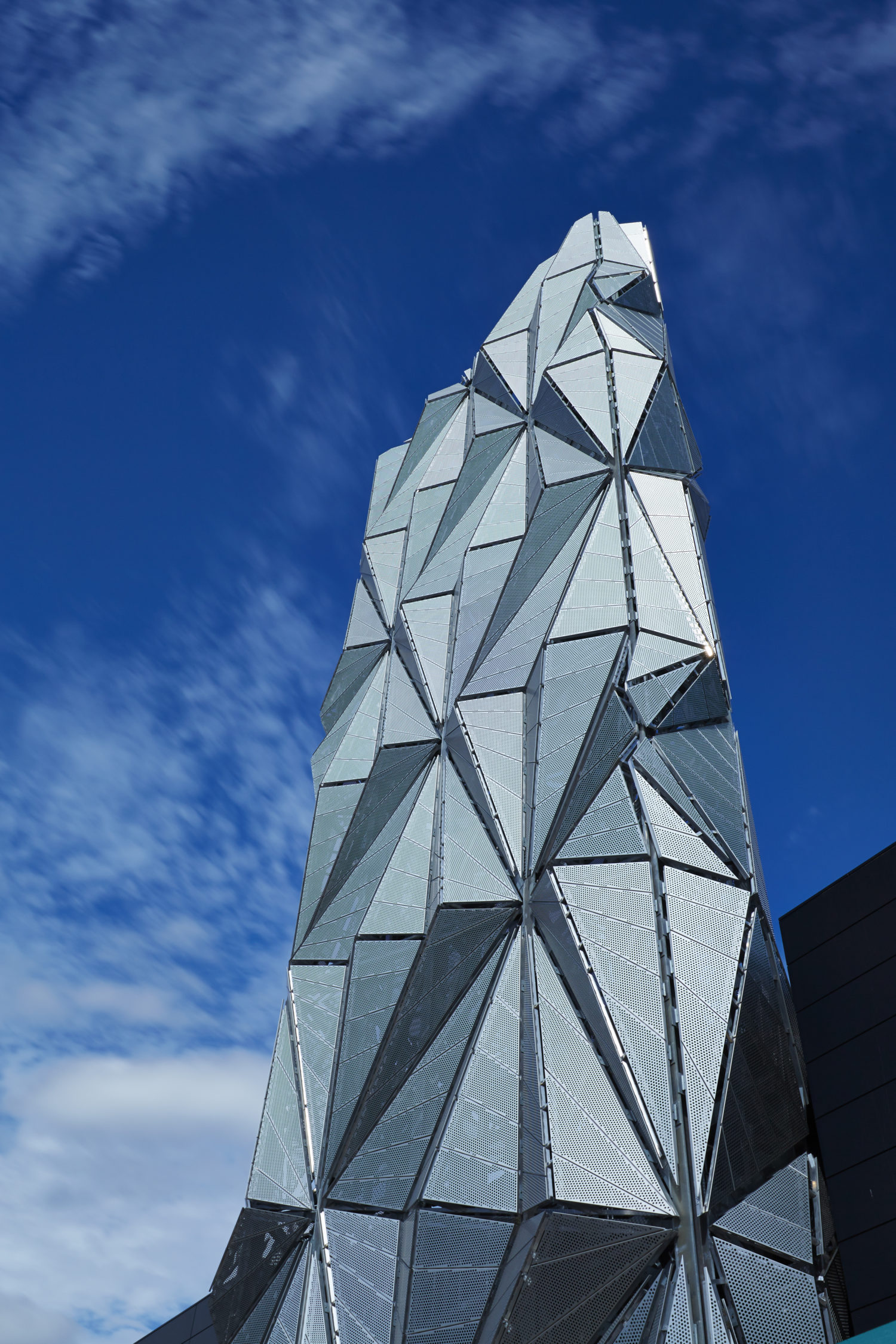
Conrad Shawcross RA’s Optic Cloak at Greenwich Peninsula is a powerful example. The monumental work transforms an essential piece of energy infrastructure into a dynamic sculptural landmark - its geometric aluminium form shifting as you move around it, changing the very experience of arriving at the peninsula. Its significance lies not in scale alone, but in the fact that the artist’s intervention is inseparable from the infrastructure itself.

At Heathrow, Richard Wilson RA’s Slipstream takes the idea to an extraordinary scale: a 78-metre aluminium sculpture tracing the imagined flight path of an aircraft through Terminal 2, uniting artistic vision, architecture, engineering and fabrication. Futurecity developed the cultural strategy and curated the commission, translating an ambitious idea into a permanent part of the airport experience.

Why the development sector matters

These projects reveal something fundamental about our approach: public art is not simply about the artwork. It is about the relationships created around it: artists working with architects, architects with engineers, developers creating the opportunity, fabricators realising the impossible, and communities giving a work meaning.

This is why we believe the development sector has such an important role to play. The built environment is an enormous, and still underused, cultural resource. Every new development creates buildings, public spaces, infrastructure, routes and landscapes - shaping how people experience a place for decades. That does not mean every development needs a sculpture, or that public art should become another line on a checklist. It means developers can be serious cultural patrons of the city and that patronage returns value across many streams at once.

Ambitious public art creates place identity and distinctiveness that set a development apart; it draws footfall, dwell time and destination value to new quarters; it delivers social value by making exceptional art freely accessible in people’s everyday lives; it supports artists and adds to the cultural offer of the city; and it connects new development to the history, character and communities of a place. In short, culture is not a cost to be value-engineered out, but an investment that compounds commercially, socially and culturally across the long life of a place.

Sculpture that carries meaning

Clare Twomey’s Anatomy of Time at 65 Davies Street shows this potential. Embedded into the building above Bond Street station, the work draws on the historic landscape of Mayfair, including the lost River Tyburn - using sculpture to connect a new development with the stories of the place that existed before it. Here, sculpture becomes a way of revealing history, giving a new building another layer of meaning.

Jaume Plensa’s WE at The Shard offers another perspective: two monumental sculptural heads, drawing on multiple alphabets to explore language, identity, diversity and shared humanity, create a relationship across the public realm. The work becomes more than a visual landmark - a meeting point, a marker, a moment of pause within the everyday life of the city.

From single works to cultural landscapes

A single sculpture can be powerful, but a collection of artworks can become something more - a cultural route, a sculpture trail, a sequence of experiences connecting different parts of a neighbourhood. London Sculpture Week itself demonstrates the power of this idea: by connecting programmes and artworks across the capital, the city becomes the cultural venue, and sculpture is encountered not in isolation but as part of the journeys people make every day.

Futurecity shares that ambition. Our role is often to translate between worlds, helping developers understand the cultural opportunities within their projects, while helping artists realise ambitious ideas within the practical realities of city-making.

What could sculpture help us make?

Every building has a façade. Every development has a threshold. Every neighbourhood has routes, spaces and infrastructure. Every place has histories waiting to be explored. The question is whether we see these simply as functional requirements, or recognise their potential as cultural opportunities.

For us, the question is therefore not “Where should we put the sculpture?” It is “What could sculpture help us make?” Could it create a landmark? Tell a story? Transform infrastructure? Connect people to a place? Give a new development an identity? These are questions that place the artist much closer to the beginning of the city-making process - in the room when decisions are made, alongside architects, engineers, planners, developers and communities.

Because the future of public art is not about putting more sculpture into our cities. It is about recognising what sculpture can do for them. It can carry memory, express identity, create debate, transform infrastructure and give physical form to the ambitions of a place.

Sculpture is not an embellishment. It is part of the architecture of public life. And, at its most ambitious, sculpture is city-making.

Talk to us about your project

Futurecity works with developers to embed art and culture at the heart of city-making. To discuss the cultural potential of your development - or to request our portfolio - email us at info@futurecity.co.uk.

Futurecity in the Field is a series of dispatches from the cultural frontline. Follow us for future editions.