
For nearly two decades internationally recognised and multi-award winning photographer Ron Bambridge has documented many of Futurecity’s public art projects, capturing not only the completed works, but also archiving the ideas, relationships and moments of exchange that shaped them. From early collaborations to major commissions, Ron Bambridge and Futurecity Founder Mark Davy worked side by side to translate these new complex art and architectural ideas into images that could communicate the work to a global audience. All photography in this article was taken by Ron Bambridge.


Futurecity spoke with Ron Bambridge about how he approached the commissions:
FC: Ron what distinguished Futurecity projects from your other work?
RB: It was the scale of the works. One project might involve documenting a large physical architectural intervention: the next, a vast urban artwork animated by light, sound or movement. Their projects offered me major challenges, technical and physical but also how art lived and existed in public space, how people encounter it, and how it might work within developments that would inevitably change over time.


FC: How did you begin planning and preparing for a new photo shoot? RB: Light is always the starting point, followed closely by the composition and my position. Sometimes it’s a matter of moving a few feet left or right, lowering the camera slightly, or waiting for the right moment of stillness or movement, but inevitably local problems would present themselves. People were often present in my images, but carefully so-as-to provide scale and life, but never so many that the work itself was overwhelmed. The aim was and is clarity, atmosphere and context, creating photographs that allow those who can’t be there in person to truly understand the work. FC: How has your practice evolved through the shifts in technology? RB: I have always been interested in stretching the limits of the camera, film and processing, from large-format film and panoramic cameras to digital processes and time-lapse and yet the core principles remain the same, discipline, observation, and the pursuit of the strongest possible image. Whether shooting industrial infrastructure, architectural landmarks or public artworks, the goal is always the same to find the best angle, great lighting and the suggestion of real life all captured in a moment that best expresses the intent of the project.


FC: Which projects stand out for you over the past two decades?
RB: There are three Futurecity commissions that have really shaped my journey as a photographer, each one is different and demonstrates how the art works created atmosphere, meaning and memory within a place. Photographing each of them has been as much about conveying experience as recording form.
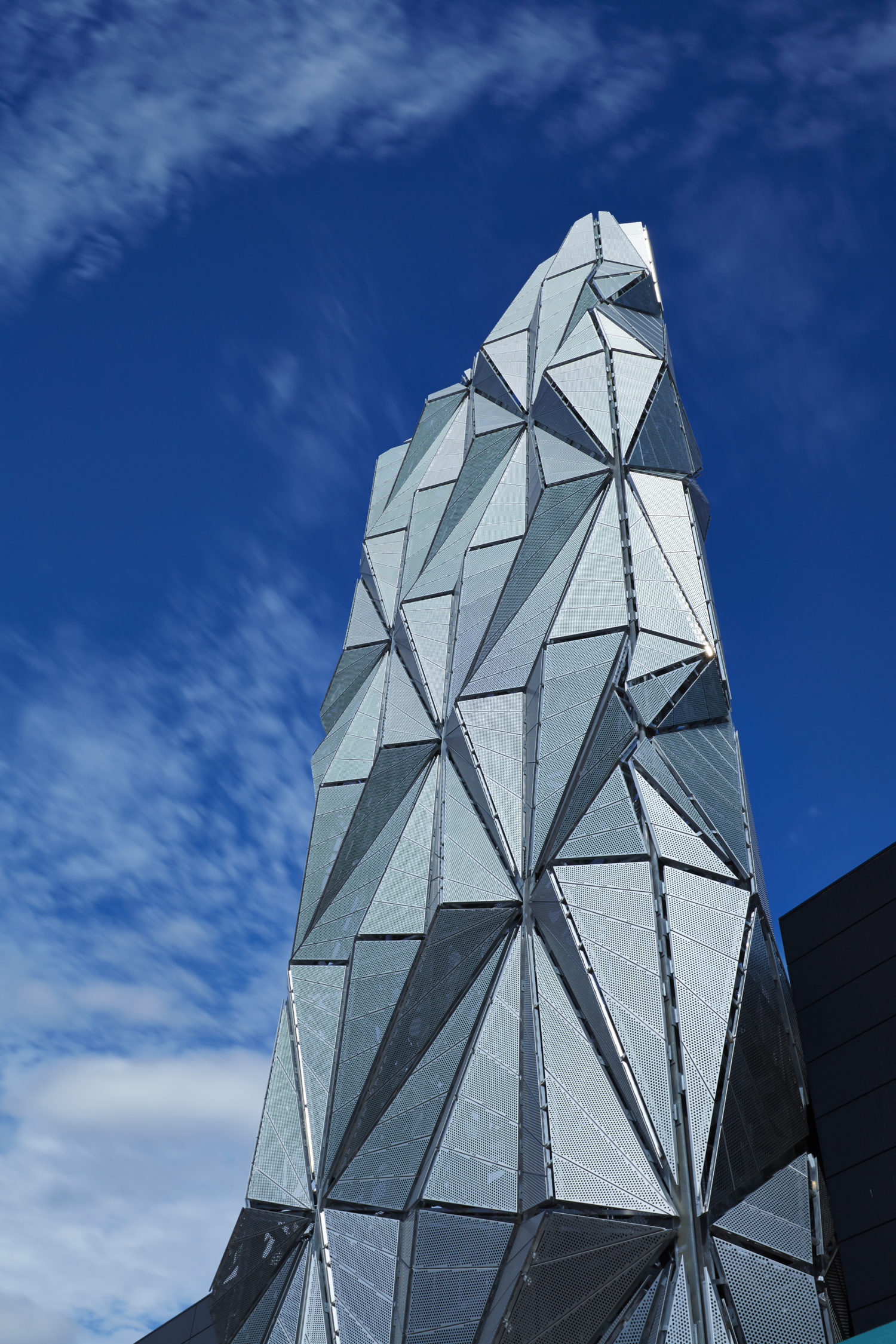
1 - Conrad Shawcross's Optic Cloak, Greenwich Peninsula
RB: I wanted to show how art and infrastructure combined to make this 50-metre tower and building so impactful. I wanted to show the result of the close collaboration between the curator, artist, architect and engineer, by capturing the complex form, surface and scale in the context of its location by a motorway. This shoot demanded time, patience and repeated visits to photograph it properly.


2 - Phil Coy Glass Mill, Lewisham
RB: This was a large streetside leisure centre in Lewisham and the new façade consisted of a vast curtain of multicoloured pixelated glass panels, animated by kinetic lighting, that changed the appearance of the building in response to external street noise, which activated lighting sensors. It required me to develop a new photographic approach, one that could suggest change, movement and interaction rather than capture a single static moment.


3 - Peter Burke Assembly, Woolwich Arsenal
RB: This is a cluster of standing Corten steel figures, large rust patina robotic structures which reference generations of local people and communities who had worked at the Arsenal as munitions workers. I really liked the way the new residents now living in the converted factories interacted with and genuinely liked the sculptures and I wanted to show that overlap between this heroic reference to the past and its context in a new restored and repurposed Woolwich Arsenal.

FC: Looking back how would you describe the creative partnership with Futurecity? RB: The two decades provided me with some of my most exciting and original work and reflects my journey as a photographer in parallel with Futurecity’s growth as an agency championing ambitious public artworks. The greatest privilege has been the chance to work with the artists, fabricators and curators I admire to create images that do justice to their ideas, but that also stand on their own as powerful photographs. My aim has always been that the viewer should look at an image and think that’s a great shot, but also to feel compelled to learn more about the place and the story behind it. It’s a daunting feeling to have that level of responsibility but I must have done something right to have worked with Mark and Futurecity for so long.


Images:
Bramah House by Clare Woods and MAKE Architects for Grosvenor Waterside
Message from the Unseen World by UVA at Paddington Central
Gilt of Cain by poet Lemn Sissay, sculptor Michael Visocchi, and graphic designer Gareth Howat for Fen Court Garden, London
The Gallery at Foyles, exhibition of works by Mark Titchner
Me. Here. Now. by Mark Titchner for Stainer Street Tunnel, London Bridge Station
Big Table by Alison Crowther for Kew Bridge
Column by Studio Swine for The Lexicon
Vertical Shell by Tobias Putrih for South Bank Tower, London
Optic Cloak by Conrad Shawcross for Greenwich Peninsula
Glass Mill by Phil Coy for the Glass Mill Leisure Centre, London
Assembly by Peter Burke for Woolwich Arsenal, London
Untitled by Jo Hayes Ward for Queen's Wharf, London
Sir John Betjeman by Martin Jennings for Kings Cross Station, London